
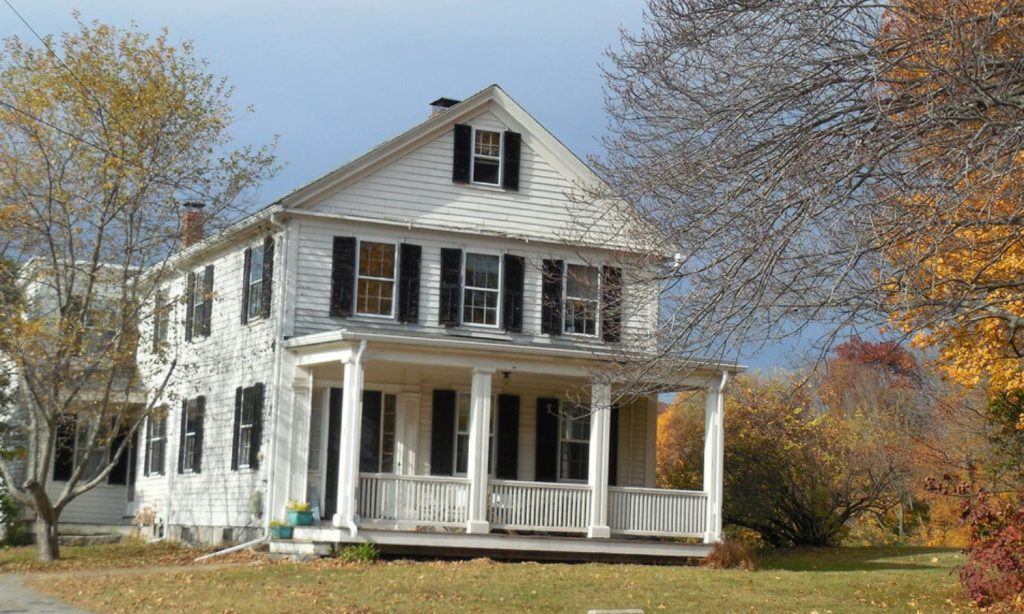
New England’s historic homes and barns were built to handle tough conditions, but after centuries of harsh weather and years of deferred maintenance, structural issues are almost inevitable.
In this month’s blog, we’re breaking down the most common structural challenges we see across New England and what it really takes to restore these buildings the right way.
Early settlers brought English building methods to New England but quickly adapted them to handle harsh winters, high winds, and coastal storms. That’s why styles like Cape Cod, Colonial, and Saltbox were developed to withstand harsh climates.
Most historic New England homes are timber-framed and supported by stone or granite foundations, using large local timbers and fieldstone from the region’s rocky soil. These materials created strong and durable structures that differ greatly from modern homes.
Even though these homes were built to handle a harsh climate, New England weather still takes a toll over time. Winter freeze-thaw cycles can shift foundations and heavy snow loads put ongoing strain on roof systems. When spring arrives, excess moisture impacts sills and lower framing. Over the years, that constant seasonal stress is exactly why structural restoration becomes necessary.
Due to New England’s harsh weather, the soil around a home freezes in the winter and thaws in the spring. As that soil freezes, it expands, and when it thaws, it contracts. Over time, that constant movement can shift stones, crack mortar, and slowly push foundations out of alignment.
This is especially common in older homes with shallow foundations or rubble and fieldstone foundations, which are more vulnerable to seasonal ground movement.
Common signs:
• Uneven floors that worsen over time
• New cracks around door/window openings
• Gaps where framing meets the foundation
• Bowing or leaning foundation walls
At any sign of uneven floors, new cracks or gaps, it’s always a good idea to seek a professional who is experienced in structural restoration of old historic homes or barns. Scheduling an inspection is essential to understanding the root of the problem and the steps necessary to fix it.
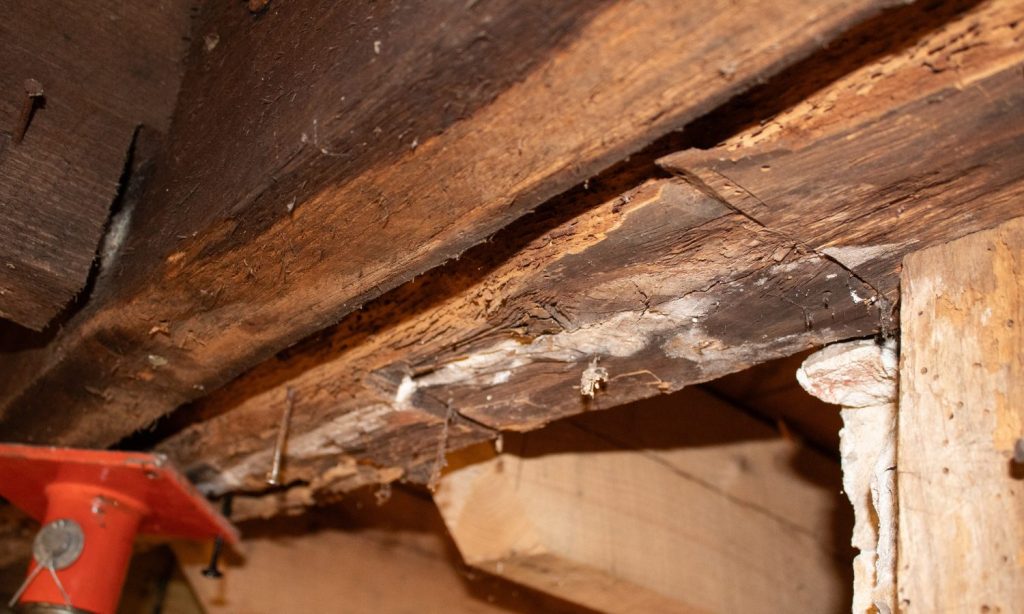
In many old New England homes and barns, the wooden sills and beams sit close to the ground or directly on top of stone, which makes it easy for them to absorb moisture. When that wood stays wet for too long, it can lead to serious water damage over time.
Often, the cause is simple, such as clogged gutters, rain splashing back onto the house, piles of snow sitting against the foundation, or water that isn’t draining away properly.
Common signs:
•Soft or crumbling wood near the base of exterior walls
• “Bouncy” floors near the perimeter
• Musty smell in basements/crawlspaces
• Visible insect activity (especially carpenter ants)
Snow piled up against your foundation might not seem like a big deal, but it’s a major source of moisture. Consider taking a closer look at your grading, drainage, and how snow is collecting and shedding around the house.
Fieldstone foundations are common across older New England homes, especially pre-1900. They were often built with irregular stone and mortar that wasn’t meant to be waterproof. Over time, mortar washes out, stones shift, and the foundation loses integrity.
Common signs:
• Loose stones or missing mortar
• Bulging walls
• Posts or beams no longer bear properly
When clients come to us with stone and mortar foundation issues, we focus on structural restoration, not cosmetic fixes. Surface patching might fix the problem temporarily, but it doesn’t solve the underlying structural problem.
True structural restoration means reinforcing and rebuilding areas that have lost integrity, correcting bearing points, and ensuring the weight of the home is properly supported and transferred into the foundation.
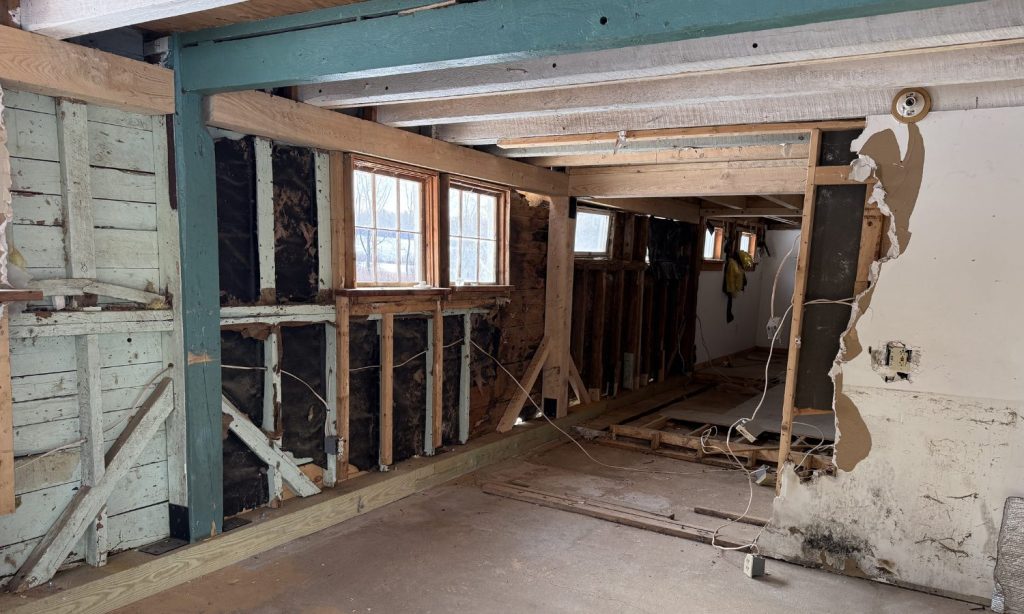
Historic barns and older homes were built to last, but over time, weather and deferred maintenance can weaken the connections that hold everything together. Heavy snow loads, strong winds, and drifting snow are often the main culprits, putting ongoing stress on frames, rafters, and braces.
Common signs:
• Sagging ridgelines or bowed roof planes
• Racking (out-of-square) door openings on barns
• Loose joinery and separating connections
• Cracked or overstressed rafters/purlins
In any barn restoration project, we start by carefully assessing the timber frame for wear and tear – especially the posts, girts, plates, and braces that hold everything together. Once a frame begins to rack (shift out of square), deterioration can happen quickly.
That’s why catching these issues early is so important. Early intervention is almost always far less expensive and far less disruptive than dealing with a partial collapse later on.
In New England, it’s common to see carpenter ants move into damp wood, and powderpost beetles affect certain hardwoods and older timbers. Insects are often a symptom of moisture, and not the original problem.
Common signs:
• Fine powder (frass) beneath timbers
• Small exit holes in wood
• Ant activity near damp sills or rim areas
• Hollow-sounding beams
At the first sign of an insect issue, it’s best to bring in an expert to assess the damage. The first step is fixing any moisture problems, since that’s often what’s attracting the insects in the first place. Then, any compromised structural members can be properly repaired or replaced.
This approach allows us to treat the problem at its source instead of patching over it without solving the real cause.
If you’re not sure if structural restoration is necessary, use this list to identify where to start…
Start outside (most problems begin with water or moisture)
• Are gutters present and clean?
• Do downspouts discharge far from the foundation?
• Does the ground slope away from the building?
• Are there areas where snow piles up against the structure?
Then check structural red flags
• Floors sloping noticeably?
• Are doors sticking seasonally and getting worse each year?
• Cracks that grow, or new cracks near openings?
• Soft wood near sills, rim areas, or barn posts?
Don’t skip the “hidden” areas
• Basement beams and posts
• Crawlspaces
• Barn sill lines and lower posts
• Connection points (where timbers meet)
Keep an eye out for signs of structural damage, such as:
• Movement that’s getting worse year over year
• Rot in sills or other main load-bearing areas
• Foundation walls that are bowing or shifting
• A barn frame that’s racking or starting to sag
• Previous repairs that don’t look or feel structurally sound
If you’re noticing any of these issues, it’s smart to have a professional take a look sooner rather than later. Catching problems early can be the difference between a focused structural repair and a much larger reconstruction project.
At Colonial Restorations, we specialize in structural restoration for historic homes and barns across New England, with a focus on long-lasting repairs that respect original craftsmanship. That means addressing the real cause of structural damage, restoring structural integrity, and using methods that are compatible with the building.
If you’re dealing with sagging floors, sill rot, or timber-frame issues, we can help you understand what’s happening and what it will take to fix it correctly.
Call: 508-735-9900
Email: info@cr1981.com