
If you own or are thinking about buying a colonial home in New England, you know the quirks are part of the appeal. But that charm often comes with its fair share of upkeep, both cosmetically and structurally.
One of the most common structural issues we see in colonial homes is rotted beams. These homes were built to last, but after 100+ years, moisture, age, and environmental exposure can take a toll on even the strongest timber.
The good news is that with the right approach to structural restoration, those beams can be replaced without compromising the integrity of your home. When done right, your home can stand strong for another century while still preserving its original character and design.
Let’s walk through how beam replacement works from start to finish.
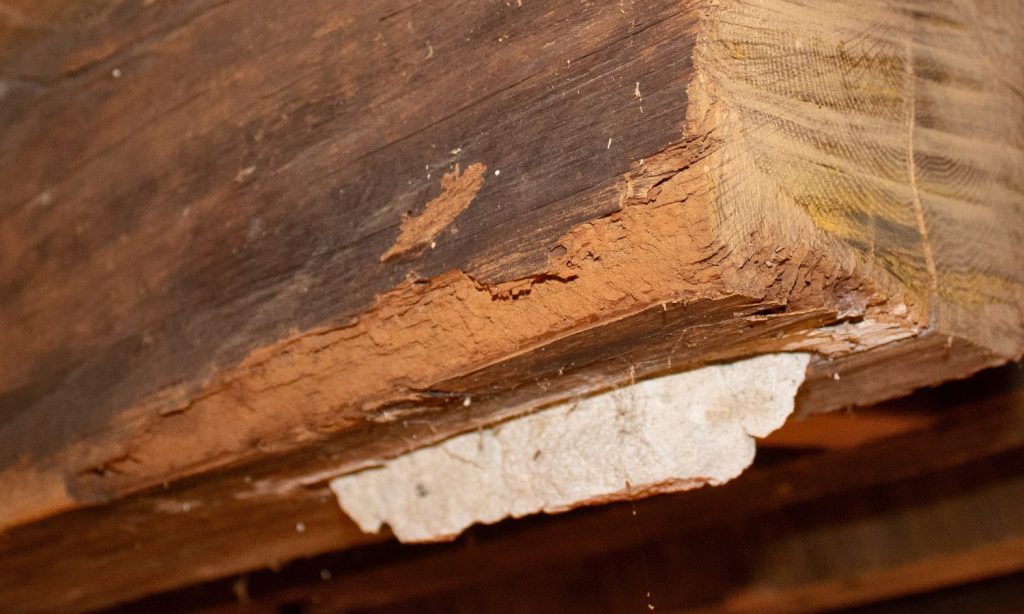
Rotted beams in colonial homes aren’t usually from age alone, they’re most often caused by moisture building up over time.
You see, when old timber is exposed to water (sometimes from roof leaks or damaged siding, or poor drainage around the foundation), this moisture can seep into basements and crawl spaces where humidity tends to be high. Then come the insects like termites or carpenter ants, who break down the natural wood faster than old age ever could.
While beams are often made from hardwoods like oak, which are incredibly durable, they are no match for the rapid damage that can be caused by moisture.
How to spot rotted beams
Not all structural damage is obvious, but there are some clear signs to look for.
Inside the home:
In basements or crawl spaces:
If you’re noticing any of these signs, there’s a good chance you’re dealing with rotted beams – and when there’s one, there’s often more. It’s a good idea to take a closer look before it turns into a bigger issue.
Not every beam can be repaired without replacing the whole thing. In most cases, a full replacement is usually necessary when…
This is where professional structural restoration comes in. Knowing the difference between repair and replacement is critical, and getting it wrong can lead to bigger (and more expensive) problems down the line.
Short answer: as soon as you suspect an issue.
The thing about rotted beams is they don’t stay the same for very long. The longer you wait, the greater the risk to your home.
Even if you’re not 100% sure, getting a professional structural inspection can give you clarity and peace of mind.
This is where the craftsmanship comes in.
Replacing a structural beam in a historic home requires time-tested methods to preserve the integrity of the home. These are some of the steps a structural restoration expert will take to replace rotting beams…
Before anything is removed, we carefully evaluate…
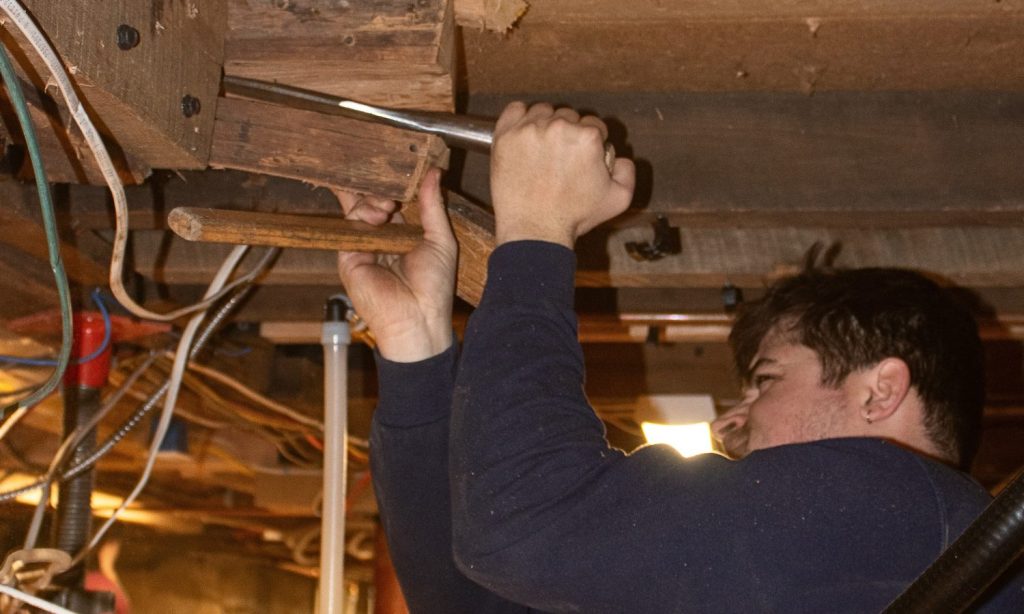
Then, we install temporary supports (like jack posts) to safely carry the load while the damaged beam is removed.
Once the structure is supported, we begin extracting the damaged beam.
Depending on the situation, this may involve:
In colonial homes, beams are often tied into the structure using traditional joinery, so removal has to be precise.
We typically replace beams with oak, which is strong, durable, and historically accurate for New England construction.
This is when the new beam is…
Here’s where craftsmanship really matters.
Instead of relying solely on modern hardware, we often use…
These methods help maintain the historical integrity of the home and allow the new beam to work naturally within the existing frame.
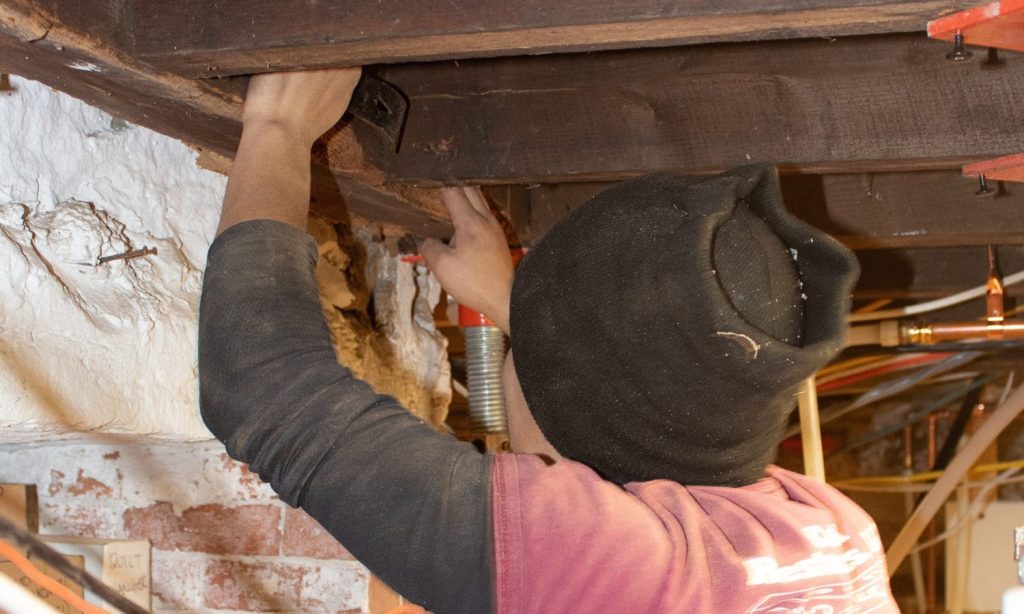
Once the new beam is in place…
Replacing rotted beams can extend the life of your home for hundreds of years.
Done right, this kind of structural restoration will help…
If you’ve noticed signs of rot, or even if something just feels “off” in your home, it’s worth having it looked at.
These homes have stood for generations. With the right care and craftsmanship, they can continue to do so.
At Colonial Restorations, this is exactly what we specialize in, by bringing historic structures back to life using proven techniques and materials that stand the test of time.
If you’re dealing with rotted beams or considering a project involving structural restoration in a historic home, we’re here to help.
Reach out to Colonial Restorations for an inspection. Learn more about our inspection services here.