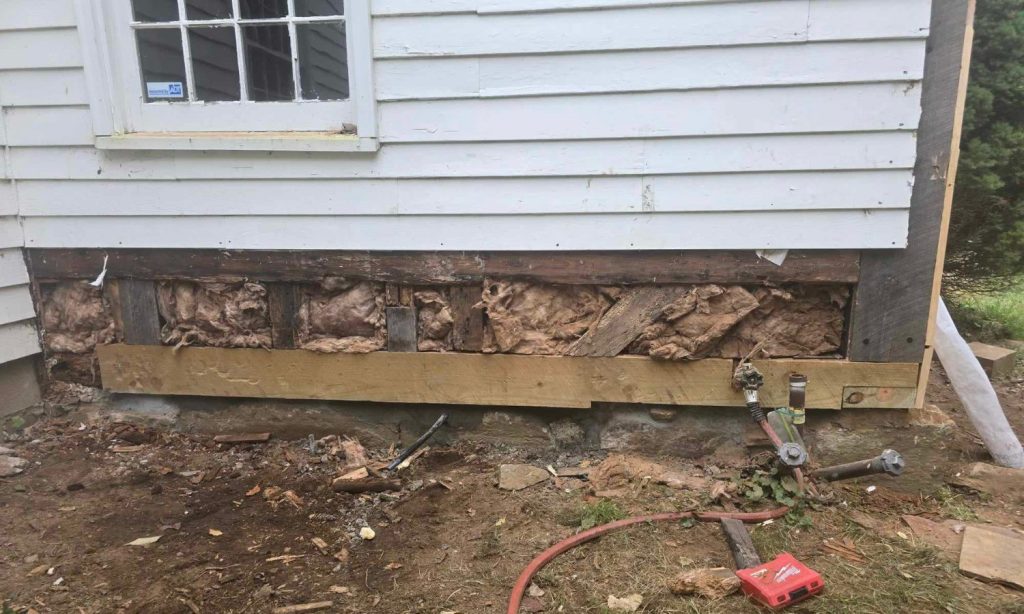
Owning an old home or barn comes with a unique responsibility. These structures were designed for longevity, but over time, exposure to weather, moisture, natural settlement, and everyday use inevitably begins to wear on them. When structural issues appear, one of the most common questions we ask ourselves is:
Can this be reinforced, or does it need to be replaced?
The answer is almost always a full replacement.
While reinforcement can sometimes stabilize a structure, it’s important to understand that not all repairs are created equal. Some solutions buy time. Others restore longevity.
At Colonial Restorations, our focus is always on what will protect the structure for the next hundred years, not just the next few years. This is why we recommend a full replacement.
Structural damage rarely happens overnight. In historic homes and barns, it typically develops slowly due to…
The challenge is that much of this damage occurs out of sight, inside sill beams, posts, floor systems, or framing hidden behind finished surfaces.
That’s why surface-level symptoms should never be ignored.
If you notice any of the following, it’s time for a professional evaluation:
These signs don’t automatically mean replacement is required, but they do indicate that the structure is changing and should be assessed before damage progresses further.
Reinforcement methods like sistering beams or adding supplemental supports can temporarily stabilize a structure. In certain limited situations, where deterioration is minimal and highly localized, reinforcement may be appropriate.
Reinforcement is generally considered when:
However, it’s important to understand what reinforcement truly does.
Sistering and supplemental support often work alongside compromised material. They help carry load, but they do not remove decay. If underlying rot continues to progress, or if moisture conditions remain unresolved, reinforcement can become a short-term solution to a long-term problem.
In many cases, we see properties where reinforcement was installed years earlier, only to fail because the root issue was never fully addressed. That is why we recommend a full replacement, to properly restore the structural integrity of the home for decades to come.
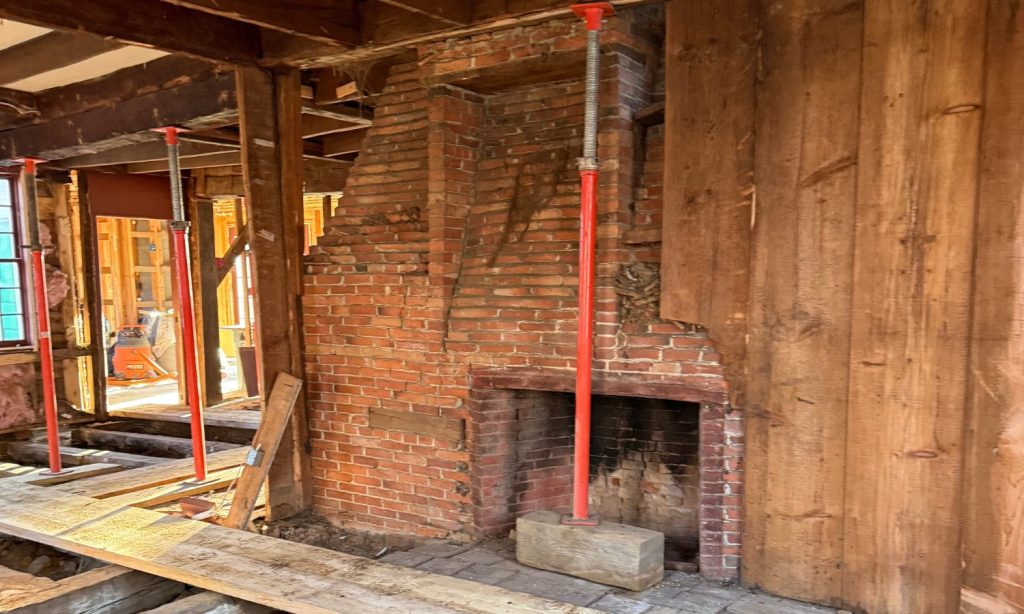
There comes a point where reinforcement is no longer the safest or most durable solution.
Full replacement is often necessary when:
In these cases, replacement is not about removing history, it’s about preserving the building as a whole. Leaving compromised structural elements in place can allow deterioration to spread, increasing future repair costs and putting the entire structure at risk.
When we replace structural components, our goal is to:
Unlike temporary reinforcement, properly executed timber replacement is intended to endure for generations to come.
At Colonial Restorations, we take a preservation-first approach by…
Our goal is never to overcorrect, but also never to under-address a structural issue that could worsen over time. The earlier structural issues are identified, the more options homeowners typically have.
You might also like “Steps to a Successful Historic Home Restoration Project”, which outlines the key steps every homeowner should take when approaching a home restoration project.
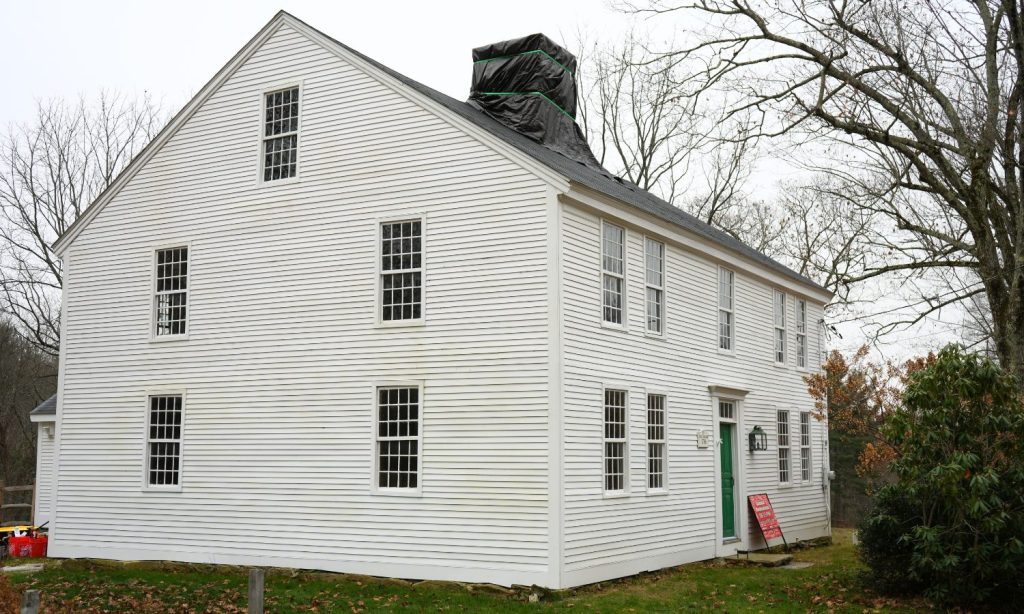
Old homes and barns deserve careful, informed structural care. Knowing when to reinforce and when to replace is essential to protecting both the building and the people who rely on it.
If you’re noticing changes in your structure, or simply want peace of mind, a professional inspection is the first step toward making the right long-term decision.
Colonial Restorations specializes in structural restoration and repair of historic timber frame structures, including sill replacement, structural inspections, and evaluations throughout New England. For a closer look at how we help homeowners, take a moment to read “What Can Colonial Restorations Do For Me?”
Call: 508-735-9900
Email: info@cr1981.com