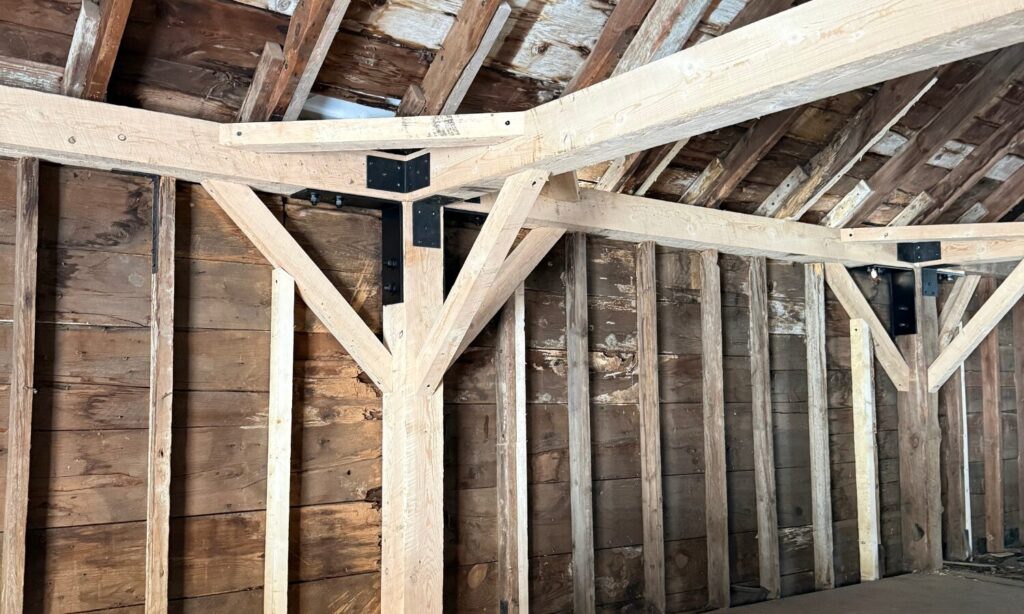
Many structural issues in historic homes develop slowly and can go unnoticed for years. Moisture, natural movement, and the passage of time often cause problems where heavy timbers connect, placing stress on the mortise and tenon joints that hold the frame together. The good news is that these issues usually show warning signs if you know where to look.
Colonial Restorations has worked on historic timber frames since 1981, and one thing we see again and again is this: the joinery usually tells the story before the structure does, if you know what to look for.
In this article, read about how these joints function, why they fail, and what that means for your old or historic New England home.
A mortise & tenon joint is the classic “lock-and-key” of timber framing:
In historic post & beam construction, these joints are common throughout older New England homes because they were designed to be strong and long-lasting. The good news is that many of these joints can be repaired when they are kept dry and properly supported. When damage is more severe, replacement joinery may be recommended by a structural restoration expert like Colonial Restorations.
Also known as the “bearing zones”, this occurs even if the joint is perfectly cut; it can still fail if the wood around it softens. This is concerning because these contact points carry load-bearing zones that experience the most compression and stress over time.
Rot commonly begins where:
Once rot reduces the wood’s density, the joint stops acting like a tight mechanical lock and starts acting like a loose fit. That’s when you get sagging, bounce, and drift.
Why it happens: moisture trapped at the foundation line, poor drainage, bulk water intrusion, or long-term high humidity in crawlspaces/basements.
Pegs are strong, but they’re still wood. Over time, they can:
And once the peg loses its grip, the joint can start to “pump” with seasonal movement, slowly enlarging the peg hole and worsening the looseness.
Old frames weren’t kiln-dried like modern lumber. Timbers can shrink and move over decades, and they also expand/contract seasonally.
That movement can create:
A little movement is normal. The problem is when movement becomes progressive (it keeps getting worse).
When a frame racks, mortise & tenon joints experience stress they weren’t meant to carry alone.
Common triggers:
If part of the foundation settles more than another, the frame tries to follow. Traditional joinery can only handle some of that for so long.
Some historic homes were often set on stone foundations without modern waterproofing, and that, when one element fails (like a sill), the whole frame can shift.
When settlement is significant, you may see:
Learn more about settling foundations in our blog: “How to Repair a Settling Foundation in Historic Homes: A Guide to Repair and Restoration.”
We often see well-meaning repairs that create new problems, like:
Learn more about your post & beam in our blog: “5 Things You Should Know About Post and Beam Construction.”
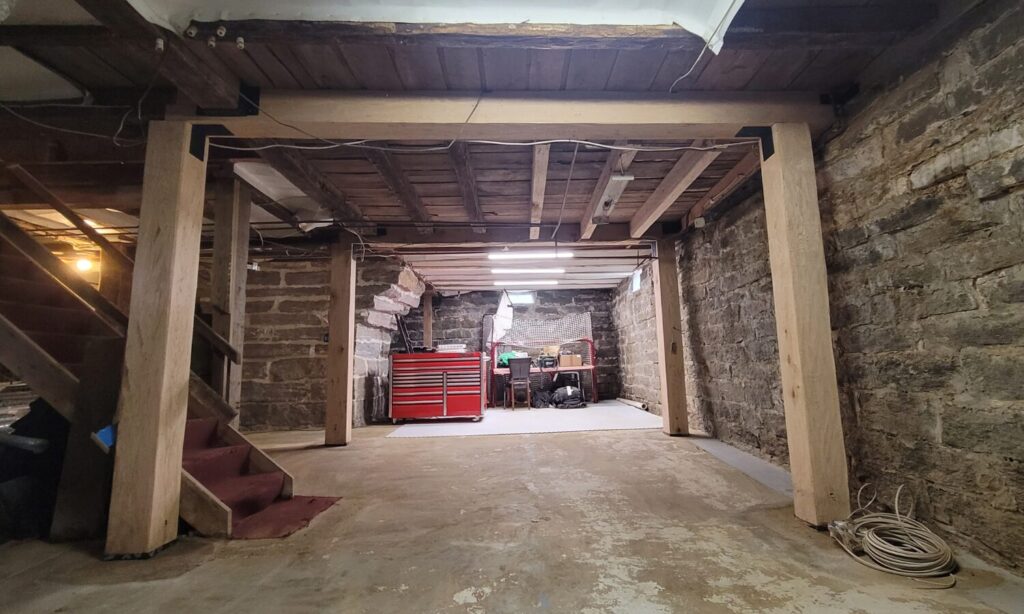
You don’t need to be a timber framer to notice when mortise & tenon joinery is distressed. Here are practical signs you can watch for:
If you’re seeing multiple symptoms together, it’s usually not “just old house charm,” it’s the frame in need of repair.
Determining if the joint itself is failing or if the joint is reacting to something else (rot, settlement, missing support) is the first step to solving the issue.
Depending on what’s going on, solutions may include:
These are all things Colonial Restorations specializes in when it comes to post & beam restoration. The goal isn’t to “modernize” your frame. It’s to preserve the historical integrity while restoring real structural performance, so the next 100 years are as strong as the last.
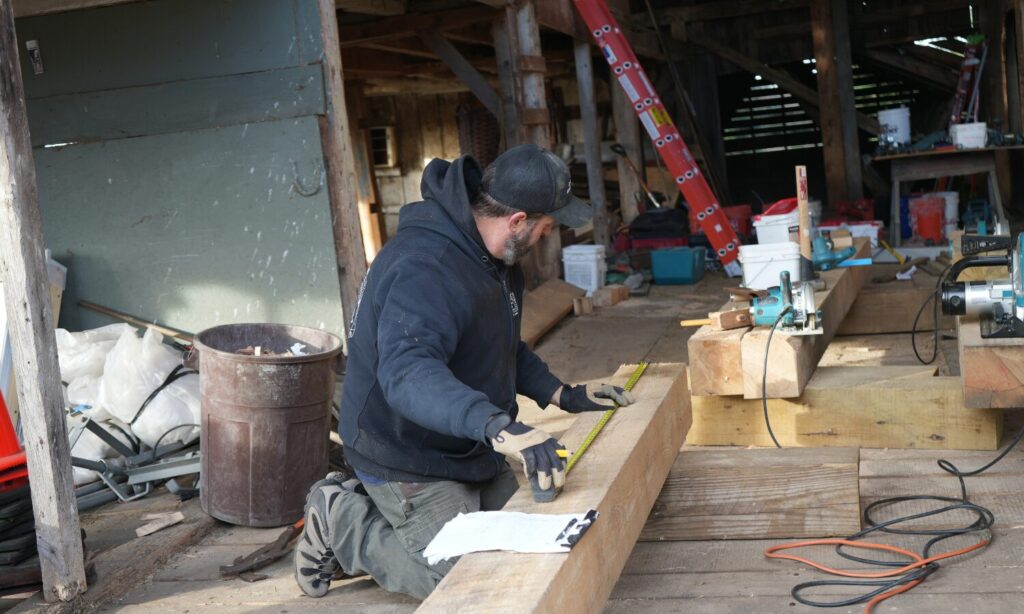
Mortise & tenon joinery is one of the reasons New England post & beam homes have endured. But when those joints start opening up, shifting, or softening, it’s rarely random; it’s usually pointing to a bigger condition (moisture, movement, or prior alterations) that needs an expert eye.
If you’re concerned about sagging floors, shifting posts, beam-end rot, or loose joinery, the safest next step is a professional evaluation, especially before you renovate, finish a basement, or invest in cosmetic upgrades.
Colonial Restorations, LLC specializes in structural restoration and repair of historic timber frame structures, including sill replacement, structural inspections, and evaluations throughout New England.
Call: 508-735-9900
Email: info@cr1981.com